


Glimr Dating App: Meet & Chat
4.22.56K Reviews
App Specs
- Version
- 1.4.1
- Updated On
- License
- Free
- Downloads
- 500,000+
- Developer
- InfiniteIntel Limited
- Categories
- Lifestyle
- Platform
- Android
Screenshots

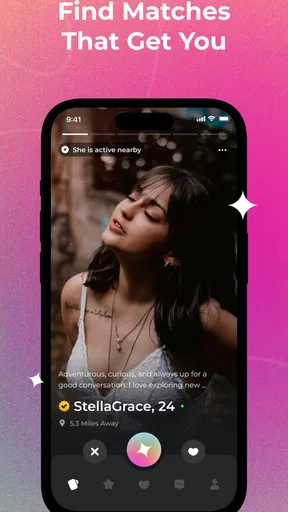
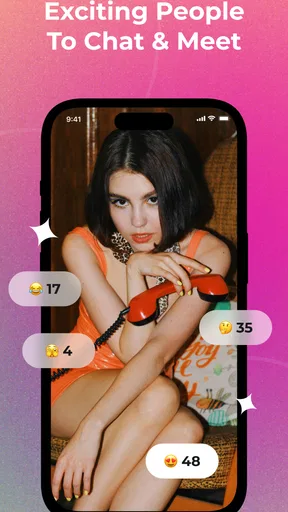
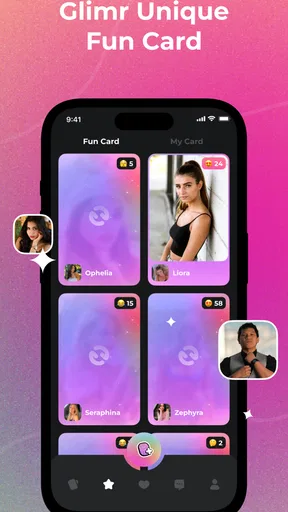
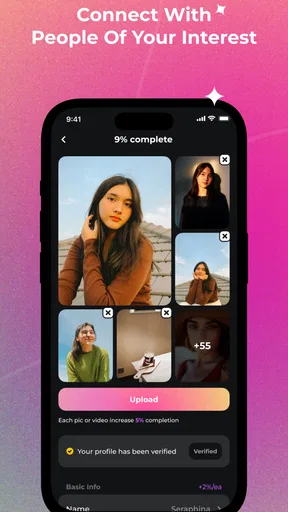
 Analysis by AppCompare
I approached Glimr Dating App: Meet & Chat as something that belongs on a personal phone, not as a casual household utility. That distinction matters. This is a lifestyle app built around meeting singles nearby, so the useful question is not simply whether it is easy to open, but whether it fits the way you manage privacy, notifications, and personal boundaries when a phone is shared, borrowed, or occasionally used by someone else.
My overall impression is positive but careful. Glimr is free to install and aims to make local dating feel more direct, with conversations at the center rather than endless passive browsing. It has reached over 500 thousand installs and holds a 4.2 average from around 21 thousand ratings, which suggests that plenty of people find the basic experience worthwhile. At the same time, dating apps are unusually sensitive to context. A feature that feels convenient on a private phone can become awkward when notifications appear on a family tablet or when another person casually picks up your device.
How Glimr fits into real household use
The most realistic shared-use scenario is not a family sitting together to use the app. It is a personal account being accessed on a phone that sometimes moves between people. Imagine using Glimr during a commute, then leaving your phone on the kitchen counter while a partner, roommate, or teenager uses it to check something. A new-chat alert, a visible conversation preview, or an open profile can reveal more than you intended. That is not a flaw unique to this app, but it is a practical issue that should shape how you use it.
I would keep Glimr on a personal device with a screen lock and avoid leaving an active conversation open when handing the phone to someone else. If your household shares one tablet or one older phone, I would not treat the app as a good fit for that arrangement. The app is designed around individual social interaction, and the account boundary needs to come from the user and the device setup rather than from a shared routine.
This is also why I would not recommend signing in for another person simply because they want to browse nearby singles. A dating profile represents an individual identity, and mixing accounts can create confusion over conversations, preferences, and who is expected to respond. If two adults in the same home want to use Glimr, separate personal devices and separate accounts are the sensible approach. That sounds obvious, but it prevents a surprisingly common category of mistake: treating a private dating profile like a general entertainment app.
For someone living alone, the household concern becomes a privacy habit rather than a barrier. I found the app easier to evaluate when I treated each interaction as personal correspondence. I would check messages when I had time to answer thoughtfully, rather than opening the app whenever a notification appeared. That small change makes the experience feel less reactive and reduces the chance of a conversation being displayed at an inconvenient moment.
Starting with clear personal boundaries
Glimr is free, which lowers the barrier to trying it, but free access should not be confused with a completely cost-free experience. The app includes in-app purchases ranging from $0.99 to $499.99 per item. That is a wide span, so I would approach any paid option slowly, read the purchase screen carefully, and avoid tapping through quickly just because I want to see what happens next.
Worth Reading Before You Choose

EA SPORTS FC Mobile 26 Is a Bigger Football Game, but It Takes Time

Flipboard Shows What News Apps Must Do Beyond the Feed

Switching to Android Auto Means Rethinking Your Driving Routine

Google Calendar Makes a Crowded Week Easier to Manage

Ludo King Makes the Most of the Minutes Between Plans

Baby Panda World Brings Quick Play to Modern Phones, but Its Game Library Feels Busy
My practical setup advice is to decide your limits before exploring the app. Choose how much profile information you are comfortable showing, what kind of photos you want associated with a dating account, and how quickly you are willing to move a conversation away from the app. I would also decide in advance whether you want to meet only people who live genuinely close by or whether a wider local area is acceptable. These decisions are easier to make calmly during setup than in the middle of an exciting conversation.
Another useful boundary is separating dating time from household time. If you are cooking, caring for children, working from home, or sharing a room, it may be better to answer later instead of trying to maintain a conversation in fragments. Glimr is built for meeting and chatting, but that does not mean every message needs an immediate reply. A slower, more deliberate rhythm can help you notice whether somebody is actually compatible rather than merely available.
I would also avoid using a profile that another household member helped create unless the final wording and photos genuinely represent you. Friends can be useful for spotting unclear prompts or awkward pictures, but a dating profile written by committee often sounds polished without sounding personal. The strongest reason to use an app focused on being genuine is to make sure the person you meet is responding to the real version of you.
Using chat for coordination instead of endless scrolling
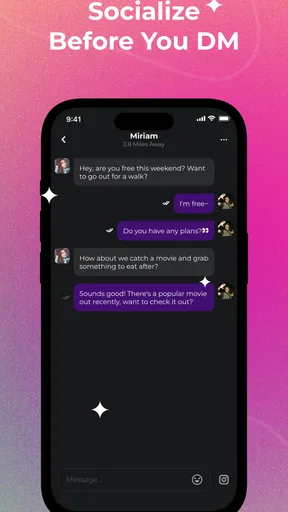
The strongest part of Glimr’s concept is the move from discovery toward conversation. Meeting people nearby is only useful if the interaction can become clear and practical. I found it helpful to use chat as a way to learn basic compatibility before discussing a meeting: availability, communication style, distance, and whether both people are looking for the same kind of connection.
A concrete everyday example would be someone with a busy schedule who has only one free evening after work. Instead of exchanging vague compliments for several days, that person can explain their availability, ask whether the other person prefers a short coffee or a longer outing, and see whether planning feels easy. If the replies remain evasive, inconsistent, or overly intense, that is useful information too. The chat is not just a waiting room before a date; it is an early test of how another person handles ordinary coordination.
I recommend keeping early messages specific. Asking about a recent interest, a favorite local activity, or what a relaxed first meeting looks like usually gives more useful information than repeating broad questions about personality. At the same time, I would avoid sharing your exact home address, workplace details, or a household member’s routine. Nearby matching can make conversations feel familiar quickly, but geographical closeness is not the same as trust.
Compared with a social network, Glimr is more focused because the expected purpose is dating rather than general posting. Compared with a traditional matchmaking service, it feels more immediate and conversational, but it also places more responsibility on the user to judge intent and quality. That trade-off is important. If you want a highly structured process with extensive guidance, a more formal matchmaking option may suit you better. If you prefer to start with direct conversation and make your own decisions, Glimr is the more natural choice.
One tip I found especially useful is to judge coordination quality before judging chemistry. Someone can be charming in a short exchange but unreliable when arranging a simple call or meeting. Notice whether they answer the actual question, respect your timing, and accept a reasonable boundary without turning it into an argument. Those details are more informative than a fast stream of flattering messages.
Age context, trust, and personal safety
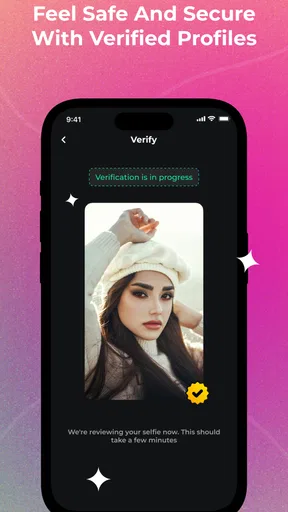
Glimr carries a Mature 17+ content rating, so I would treat it as an adult-oriented dating environment and keep it away from children’s profiles and shared youth devices. The age label is not a substitute for supervision or judgment, and it should not be read as a guarantee that every person you encounter is suitable or truthful. Anyone using the app should understand that profiles and conversations still require critical thinking.
For households with teenagers, I would not present Glimr as a general social app for experimentation. Its purpose is dating, and the mature context makes it inappropriate for casual family use. Parents or guardians who are managing a shared device should make sure the app is not left signed in where a younger person can open it accidentally. Likewise, a teenager should not be encouraged to borrow an adult’s account or use a profile that does not belong to them.
Trust should develop in stages. I would start with in-app conversation, avoid sending money or sensitive documents, and be cautious if somebody quickly pushes for secrecy or asks you to leave the app before you are comfortable. A first meeting should take place in a public setting, with someone you trust aware of the plan. These are not reasons to avoid Glimr; they are the normal precautions I would apply to any service that connects me with people I have not met.
The local focus can be both a strength and a weakness. It may make arranging a short meeting more realistic than talking to someone far away, but it can also make privacy feel more delicate in a small community. If you recognize people easily or have a limited social circle, think carefully about the photos and personal details you publish. A profile should help someone understand your personality without revealing enough information to map your daily routine.
I would also pay attention to how the app fits your emotional boundaries. If you tend to take unanswered messages personally, become pressured by frequent contact, or find dating apps distracting, set a specific time to check Glimr and mute or manage interruptions through your device when appropriate. The aim is to keep the app useful without allowing it to dominate your attention or household conversations.
Version, developer, and day-to-day expectations
InfiniteIntel Limited is the developer behind Glimr, and the app was released on January 13, 2025. Its current version is 1.4.1, with support beginning at Android 7.1. That makes it accessible to people using older Android devices, although the actual experience will still depend on the phone’s performance, available storage, and how comfortably you can manage a private dating account on that device.
I would keep the app updated when an update is available, especially for a service built around messaging and personal information. Updates can affect stability and usability, but I would still review the change screen rather than assuming every update changes the dating experience in a major way. If you use an older phone shared with other household members, the bigger concern is not simply compatibility; it is whether the device can remain private enough for personal conversations.
The rating of 4.2 from around 21 thousand ratings gives Glimr a credible starting point, but I would not use that number as a promise that every local area or every conversation will feel equally active. Dating apps can vary greatly depending on who is nearby and how many people match your preferences. Someone in a large, socially active area may find the local emphasis more useful than someone in a smaller community where the pool is limited.
The purchase range deserves another practical reminder. I would begin with the free experience, understand what the normal chat and discovery flow feels like, and only then consider whether a paid option solves a problem I actually have. Paying does not automatically create compatibility, better manners, or a safer meeting. It may be worthwhile for a user who understands the value of a particular upgrade, but it is not something I would buy simply because the first day feels quiet.
Who should choose Glimr, and who should skip it?
I think Glimr is a good match for adults who want a straightforward way to meet singles in their area and are comfortable taking responsibility for the pace of the relationship. It suits someone who prefers direct chat, wants to test conversational chemistry before arranging a meeting, and can maintain sensible privacy boundaries. It is also a reasonable option for a person who wants to try a dating app without paying at the point of installation.
I would be more hesitant to recommend it to somebody who needs a shared-device experience, extensive household controls, or a heavily guided matchmaking process. It is not the right choice for children or for a teenager looking for a general-purpose social platform. I would also suggest considering alternatives if you dislike initiating conversations, want a carefully filtered professional matchmaking service, or live somewhere with very few nearby users.
People who already know exactly what they want from dating may appreciate the freedom here, while people who are unsure about their goals may need to spend more time setting boundaries before opening chats. The app can help create opportunities, but it cannot decide whether a connection is healthy, whether a person is honest, or whether a meeting fits your life. That judgment remains with you.
One less obvious trade-off is convenience versus discoverability. A nearby service can make a first meeting easier to arrange, but it may also increase the chance of crossing paths with acquaintances. Another is speed versus context: quick chat can help you move past stale browsing, yet fast exchanges can encourage premature trust. I would use Glimr deliberately, not passively, and treat every step from profile to meeting as a separate decision.
My household verdict
After looking at Glimr through both a dating and a shared-device lens, I see it as a focused lifestyle app rather than something that belongs in a communal household setup. Its free entry, local orientation, and chat-centered approach make it appealing to adults who want to meet people nearby without turning the process into a formal project. I especially like the idea of using conversation to test practical compatibility before investing time in a date.
My recommendation comes with clear conditions: use a personal account, protect the device, keep conversations private, watch purchase screens carefully, and do not confuse proximity with trust. If you can manage those boundaries, Glimr is worth trying. If your main requirement is family sharing, youth access, or a tightly supervised dating process, I would choose a different category of service instead.
In the end, the app works best when it supports your judgment rather than replacing it. I would install it for a genuine attempt at meeting local singles, begin slowly, and measure success by the quality of conversations and the ease of respectful coordination—not by how quickly the app produces a date. For private, adult use with sensible boundaries, Glimr is a promising option; for shared household use, it is better kept off the communal device.
Pros
- Clean
- modern interface makes browsing profiles quick and comfortable.
- Chat tools help move conversations beyond simple profile matching.
- Useful for discovering people nearby as well as potential long-distance matches.
- Profile presentation encourages users to share interests and personal details.
- The app is easy to understand for first-time dating app users.
Cons
- The quality of matches may vary significantly by location.
- Some features may require a paid subscription or in-app purchases.
- New users in smaller cities may find fewer active profiles.
- As with any dating app
- fake or incomplete profiles can appear.
- Users should review privacy settings before sharing personal information.
FAQs for Glimr Dating App: Meet & Chat
What is Glimr Dating App: Meet & Chat?
Glimr Dating App: Meet & Chat is a social dating platform designed to help people discover potential matches, view profiles, and start conversations online. The app focuses on meeting new people through profile browsing and chat features. As with any dating service, the quality of your experience depends on the number of active users in your area and how complete and genuine the available profiles are.
Is Glimr Dating App: Meet & Chat free to use?
Glimr can generally be downloaded and used without an upfront payment, allowing users to create a profile and explore the basic dating experience. However, some features may be restricted behind optional subscriptions, in-app purchases, or virtual credits. Before confirming a purchase, check the app’s current pricing, renewal terms, and cancellation settings through Google Play or the Apple App Store.
How do I create a profile and start chatting on Glimr?
After installing Glimr, you typically need to register an account, provide basic personal information, and add photos or a short description about yourself. A more complete and honest profile can make it easier for others to understand your interests. Depending on the app’s available features, you may need to match with someone or receive mutual interest before starting a conversation.
Is Glimr Dating App safe and suitable for everyone?
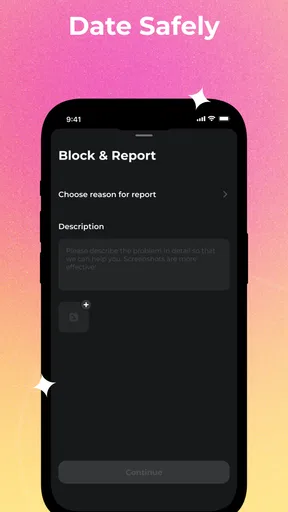
Glimr is intended for adults seeking online social or romantic connections, so users should review the minimum age requirement and the platform’s terms before signing up. Avoid sharing your home address, financial information, passwords, or private documents with people you meet. Use blocking and reporting tools when available, and arrange any first meeting in a busy public place.
What should I do if I encounter a fake profile or inappropriate behavior?
If a profile appears suspicious or someone sends offensive, threatening, or inappropriate messages, stop communicating and use Glimr’s block and report options if they are available. Do not send money or click unfamiliar links. Save relevant evidence, such as screenshots, and contact the app’s support team. For immediate threats, harassment, or suspected fraud, contact local authorities.


